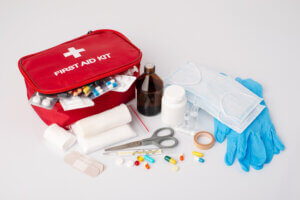
Why Emergency Preparedness Is a Clinical and Operational Requirement
Non-acute practices — including ambulatory surgery centers (ASCs), office-based procedure suites, and medical offices, operate without the immediate backup of a hospital system, yet perform procedures that carry real emergency risk.
An unplanned bleed, an airway compromise, or an anaphylactic reaction does not allow time to source supplies. When an emergency occurs, what is already on the shelf determines what the team can do in the next three minutes.
Emergency preparedness is also a regulatory expectation. ASCs subject to CMS Conditions for Coverage must maintain a documented emergency preparedness program that complies with applicable federal, state, and local requirements. OSHA requires covered employers to implement an exposure control plan that includes protective measures, engineering and work-practice controls, personal protective equipment, training, and related provisions for bloodborne pathogen exposure. These are not optional frameworks. Effective preparedness requires three things working together: the right emergency preparedness surgical supplies, sourced through authorized channels, with documentation and workflow that supports their use.
How Pipeline Medical’s Marketplace Enhances Emergency Readiness
Pipeline Medical’s marketplace approach transforms how medical practices access critical emergency supplies. Unlike traditional procurement methods that involve multiple suppliers and inconsistent availability, our streamlined marketplace consolidates high-quality trauma and critical care supplies in one accessible platform.
Our unique procurement system eliminates the complexity and uncertainty that often plague medical supply chains. Through Pipeline Medical’s marketplace, medical professionals gain access to a comprehensive range of FDA-approved emergency supplies with complete transparency regarding origin, specifications, and compatibility. This system ensures medical practices maintain appropriate stock levels of life-saving supplies without the typical procurement headaches.
The Pipeline Medical difference lies in our specialized understanding of emergency preparedness needs across different medical practice types. Our marketplace is specifically designed to support medical professionals in creating customized emergency response kits that align with their specific practice requirements and patient populations.
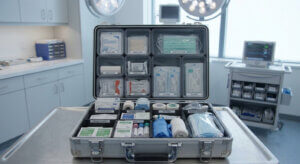
How Risk Assessment Shapes Your Supply Planning
Before ordering, define the risks your specific practice is most likely to face. The answer differs by specialty, procedure volume, patient population, and physical layout. A medical spa performing cosmetic injectables carries a different risk than an ASC performing office-based surgery.
A wound care clinic has different baseline needs than a pain management practice. Work through these questions with your team:
• What procedures do we perform that carry hemorrhage, airway, or cardiac risk?
• What emergencies have occurred or nearly occurred in this setting in the past three years?
• What is our transfer protocol, and how many minutes does transfer to a higher level of care typically take?
• Which staff are trained on which devices, and are those certifications current?
Your supply plan should follow from those answers. Supplies that cannot be used safely by trained personnel on site are not preparedness assets.
Core Supply Categories for Emergency Preparedness
The following categories represent the most common emergency needs in non-acute settings. Each includes notes on training requirements, IFU (Instructions for Use) compliance, and scope-of-practice considerations.
Wound Care and Hemorrhage Control
Sterile gauze and wound dressings
Sterile gauze is a first-line resource for wound coverage, bleeding control, and packing. Select sizes appropriate for the wound types your procedures are most likely to produce. Review storage requirements per manufacturer labeling to maintain sterility.
Hemostatic agents
Hemostatic agents — available in gauze, sponge, and granular forms — support clotting in wounds where standard pressure is insufficient. Use should follow the manufacturer’s IFU and be performed by personnel trained in hemorrhage control. Product selection should account for the clinical context, contraindications, and shelf life.
Adhesive medical tapes and closure strips
These secure wound dressings and support wound edge approximation during stabilization. Confirm compatibility with the dressings used in your kit.
Antiseptic solutions
Antiseptic solutions are used for skin preparation and wound-adjacent surface disinfection. Product selection and application method should follow the manufacturer IFU and your clinical protocol. Wound-specific antiseptic selection should follow current clinical protocols and product labeling.
Surgical suture kits
Suture kits support closure of lacerations and procedure-related wounds. Maintain an inventory that covers the wound types your procedures may produce, and confirm that personnel using suture materials hold current competency. For a full overview of suture selection for non-acute settings, see our suture selection guide.
Airway Management
Airway emergencies are among the highest-acuity events in non-acute settings. Stock supplies in this category only if trained personnel are present and protocols are in place for use and transfer.
Endotracheal tubes (ET tubes)
ET tubes maintain a patent airway and support mechanical ventilation when needed. Stocking decisions should reflect the scope of procedures performed, anesthesia type, and the training level of clinical staff. Follow manufacturer IFU for sizing, insertion guidance, and cuff management.
Bag-Valve-Mask (BVM) resuscitators
BVM devices deliver positive pressure ventilation during resuscitation and respiratory emergencies. BVM use requires trained personnel and should be included in staff competency programs. Inspect devices regularly per manufacturer guidance and replace per expiration date or after any use.
Chest seals
Chest seals are indicated for management of open chest wounds and penetrating thoracic trauma. Their use in non-acute settings should be governed by written clinical protocols, trained personnel, and clear criteria for emergency transfer. Follow manufacturer IFU strictly.
Cricothyrotomy kit
A cricothyrotomy kit provides emergency surgical airway access when other methods are not feasible. This intervention requires specific training and is not appropriate in settings where qualified personnel are not present. Stocking this device without a corresponding training and protocol plan does not constitute preparedness.
Personal Protective Equipment
OSHA’s Bloodborne Pathogen Standard requires covered employers to provide and ensure the use of appropriate PPE when exposure to blood or other potentially infectious materials is anticipated. Emergency response scenarios increase exposure risk significantly. Your emergency supply inventory should include:
• Exam and surgical gloves in multiple sizes
• Face shields or splash-protection eyewear
• Fluid-resistant gowns or aprons
• Sharps containers for immediate disposal of needles and blades
PPE must be accessible at the point of use, not stored remotely. Review your exposure control plan to confirm emergency-scenario PPE placement is addressed. For more on procurement of infection control supplies, see our PPE and infection control catalog.
Anesthesia and Pain Management
Local anesthetics
Local anesthetics support wound exploration, laceration repair, and painful procedures during stabilization. Use should follow clinical protocol, manufacturer IFU, and applicable scope-of-practice guidelines. Document agent, concentration, dose, and lot number in the clinical record.
Pain relief medications
Oral and intravenous pain medications support patient comfort during assessment and stabilization before transfer. Controlled substances require compliance with DEA storage, dispensing, and documentation requirements. Non-controlled analgesics should be stocked per formulary approval and reviewed for expiration regularly. All medications in the emergency kit require lot number recording, expiration date tracking, and documentation of any use in the appropriate clinical and inventory system.

Storage, Expiration, and Traceability Controls
A supply is only useful if it is unexpired, sterile, and traceable.
Expiration and Condition Review
Conduct a documented inspection of all emergency kit contents at least every six months. Many practices implement quarterly reviews to reduce the risk of discovering expired supplies during an actual emergency.
For each review, record:
• Product name and description
• Lot number
• Expiration date
• Condition of packaging
• Action taken (retained, replaced, or removed)
Replace any item with compromised packaging, unclear labeling, or an expired date before closing the review record.
UDI and GS1 Data Capture
The FDA’s Unique Device Identifier (UDI) system applies to most medical devices and includes two components: a device identifier and a production identifier. Production identifiers may include lot or batch number, serial number, expiration date, and manufacturing date as included on the label.
When receiving or documenting the use of devices in your emergency kit, scan and record the UDI or GS1 barcode data. This supports:
• Accurate lot number capture for recall response
• Expiration date verification at intake
• Clinical documentation of the specific product used
Record this data in your inventory system, recall tracking log, and clinical documentation as applicable. If a device recall is issued, your lot number records determine whether your stock is affected and whether any patients need follow-up.
Authorized Sourcing
Source emergency supplies through authorized distributors and verified channels. Supplies sourced outside authorized channels may lack cold-chain documentation, tamper-evident packaging, or traceability records. This creates risk in both patient safety and regulatory compliance.
Pipeline Medical sources products through authorized distribution channels. Product origin, regulatory status, and lot traceability are available for items purchased through our marketplace.
Staff Workflow and Review Cadence
Documentation and supplies are two parts of preparedness. A practiced team response is the third.
Assign ownership. Designate a staff member responsible for emergency kit inspection, restocking, and documentation. This should be a named role, not a general expectation.
Run tabletop or simulation reviews. At least annually, walk through your most likely emergency scenarios as a team. Identify where supplies are stored, who retrieves them, who performs each intervention, and when transfer is initiated.
Review IFU for each device. IFU documents the manufacturer’s guidance on intended use, contraindications, preparation, application, and disposal. All personnel expected to use emergency supplies should have reviewed the IFU for each relevant device and completed any required competency documentation.
Document adverse events. If an emergency supply fails or contributes to an adverse event, report it through FDA MedWatch — the FDA’s safety information and adverse event reporting program for health professionals, patients, and consumers. MedWatch reporting supports the broader safety system and is expected of healthcare providers who observe device or product issues.

Procurement Considerations
Building a well-stocked, traceable emergency kit requires reliable access to medical-grade supplies through verified procurement channels. Several factors create friction in this process: expiration timelines, variable availability, budget constraints, and the need for documentation at intake.
Pipeline Medical’s marketplace is built for licensed practices and supports structured procurement with order history, product documentation, and access to a range of surgical and emergency-category supplies. Our team can support practices in identifying appropriate products by category, confirming regulatory status, and maintaining reorder consistency.
Supplies stocked through our marketplace are sourced through authorized channels. Regulatory status — including FDA-cleared, FDA-approved, listed, or otherwise regulated as applicable — reflects the specific classification of each product and is available through product documentation.
Frequently Asked Questions
How often should emergency surgical supplies be inspected and restocked?
Inspect your emergency kit at minimum every six months. Many practices review quarterly. Each inspection should be documented with product names, lot numbers, expiration dates, and any actions taken. Replace expired or compromised items before closing the review record.
What is UDI and why does it matter for emergency supply management?
The FDA’s Unique Device Identifier (UDI) system provides a standardized way to identify medical devices. The UDI includes a device identifier and may include production identifiers such as lot number, serial number, and expiration date. Scanning and recording UDI or GS1 data at receipt and use supports lot traceability, recall response, and clinical documentation accuracy.
Are specialized trauma supplies restricted to trained medical personnel?
Yes. Devices such as chest seals, cricothyrotomy kits, endotracheal tubes, BVM resuscitators, and hemostatic agents require trained personnel and written clinical protocols to be used safely. Stocking these supplies without a corresponding competency and protocol framework does not constitute preparedness. Follow manufacturer IFU and applicable scope-of-practice requirements for each device.
What are the storage requirements for an emergency surgical kit?
Store supplies in a designated, clearly labeled location accessible to all clinical staff. The environment should meet manufacturer storage requirements for temperature and humidity. Confirm that storage conditions do not compromise sterility or packaging integrity. Document location in your emergency protocol so new staff can locate the kit immediately.
How should medications in an emergency kit be managed?
Track all medications by lot number, expiration date, and storage requirement. Controlled substances require DEA-compliant storage and dispensing documentation. Non-controlled medications should be reviewed for expiration at each kit inspection. Document any medication use in the appropriate clinical and inventory record, including agent, dose, lot number, and patient.
What is the FDA MedWatch program?
FDA MedWatch is the FDA’s safety information and adverse event reporting program for health professionals, patients, and consumers. If an emergency supply fails or contributes to an adverse outcome, providers are expected to submit a MedWatch report. This supports the national device and drug safety system and may trigger safety communications relevant to other practices using the same product.
Building Preparedness That Holds Under Pressure
Emergency preparedness in non-acute and office-based settings rests on three requirements: the right supplies, sourced through authorized channels, with documentation and workflow systems that support their use. A supply list alone is not a preparedness program. The practices best positioned to respond effectively match their supply inventory to their actual risk profile, train staff on IFU and device-specific protocols, build a review and documentation cadence, and source products in a way that supports lot traceability and recall response.
Browse the surgical and emergency supply catalog or contact our team to discuss procurement options for your practice’s emergency preparedness needs.
Important Safety Note: Emergency supplies, including airway devices, hemostatic agents, chest seals, and medications, should be used only by personnel with appropriate training and in accordance with manufacturer Instructions for Use (IFU), applicable clinical protocols, and scope-of-practice requirements. This article is intended for licensed healthcare providers and practice administrators. It does not substitute for clinical training, institutional protocol review, or legal and regulatory compliance guidance specific to your practice setting. Authorized Sourcing: Pipeline Medical sources products through authorized distribution channels. Regulatory status, including FDA-cleared, FDA-approved, listed, or otherwise regulated as applicable to the specific product, reflects the classification of each item as documented by the manufacturer. Confirm product-specific regulatory status through product documentation before procurement decisions. The information provided on this site is for informational purposes only and is not intended to substitute for professional medical advice, diagnosis, or treatment. Always consult a qualified healthcare provider or medical professional for guidance on any medical concerns, product use, or treatment decisions.