⚠️ BOXED WARNING: Distant Spread of Toxin EffectAll botulinum-toxin products (e.g., BOTOX® Cosmetic, Dysport®, Xeomin®, Jeuveau®, Daxxify™) carry an FDA Boxed Warning regarding the risk of distant spread of toxin effect, which may result in serious and potentially life-threatening complications, such as difficulty swallowing, speaking, or breathing, even at recommended doses. These adverse events have been reported from hours to weeks after injection. Only licensed, trained healthcare providers should administer these products. Always evaluate patient suitability and follow established safety protocols. If swallowing, speech, or breathing problems occur, seek immediate medical care. Potency units of botulinum toxin products are not interchangeable; doses are product-specific. For full safety information, review the official Prescribing Information and FDA-approved Medication Guide for each product:
|
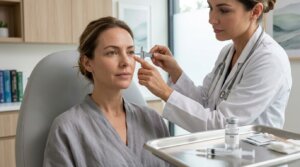
Understanding the Rising Demand for BOTOX® Around the Eyes
The periorbital region, especially the skin around the eyes, is among the first facial areas to reveal visible signs of aging. Repetitive facial expressions such as smiling, laughing, or squinting cause the underlying muscles to contract, gradually leading to the formation of dynamic wrinkles, including lateral canthal lines (commonly known as crow’s feet).
The popularity of BOTOX® Cosmetic in this region can be attributed to its minimally invasive nature, quick administration, and low downtime. Administered by qualified medical professionals, BOTOX® Cosmetic provides targeted muscle relaxation, helping reduce the appearance of fine lines and wrinkles while maintaining natural facial movement.
Important Note:
BOTOX® Cosmetic is FDA-approved in adults for the temporary improvement in the appearance of moderate to severe glabellar lines, lateral canthal lines (crow’s feet), and forehead lines.
BOTOX® for therapeutic use (onabotulinumtoxinA) is FDA-approved for several medical conditions, including chronic migraine, cervical dystonia, and overactive bladder. These are distinct formulations with different approved indications and should not be used interchangeably.
How BOTOX® Cosmetic Targets Eye-Area Wrinkles
BOTOX® Cosmetic (onabotulinumtoxinA) is a neuromodulator derived from botulinum toxin type A. It functions by temporarily inhibiting acetylcholine release at the neuromuscular junction, thereby reducing the contraction of targeted facial muscles.
When injected around the eyes, BOTOX® Cosmetic is commonly used to address:
- Lateral canthal lines (crow’s feet) [on-label]
- Fine lines beneath the lower eyelid [off-label; increased risk—consider alternatives first]
- Brow asymmetry or mild brow descent [off-label]
- Glabellar frown lines (“11 lines”) [on-label]
Off-label use disclaimer: Injection of the lower eyelid and brow-elevating patterns are off-label and should be performed only by experienced clinicians with informed consent and careful risk counseling (e.g., ectropion, diplopia, lagophthalmos risk).
This targeted chemodenervation leads to smoother skin and a more refreshed appearance without significantly altering the patient’s ability to express emotions when properly administered.
The goal of treatment is muscle relaxation—not paralysis—making injector expertise crucial to achieving optimal, natural-looking outcomes..
What Patients Can Expect: Before and After BOTOX® Around the Eyes
Reduction in Crow’s Feet Lines
BOTOX® Cosmetic has been shown to significantly reduce the appearance of lateral canthal lines. In clinical practice, most patients experience:
- Visible softening typically within 3–7 days (some earlier or later)
- Full effect around day 14
- Aim to maintain natural facial movement with appropriate dosing/placement
- Duration about 3–4 months; varies by dose, muscle activity, and patient factors
Before and after images from clinical settings consistently demonstrate reduced wrinkling around the eyes, contributing to a more youthful appearance while maintaining facial authenticity.
Enhancing Results with Forehead and Brow Area Injections
For comprehensive periorbital rejuvenation, BOTOX® Cosmetic is often administered in conjunction with injections to the frontalis (forehead) and glabellar muscles. This can:
- Minimize horizontal forehead lines contributing to visual fatigue
- Provide a subtle brow lift by relaxing the depressor muscles
- Improve brow symmetry
- Address glabellar lines that detract from upper facial harmony
This combined approach contributes to a more open and alert eye appearance while addressing multiple vectors of facial aging.
Label dosing (adults): Glabellar lines 20 Units (0.1 mL [4 U] in 5 sites). Forehead lines (frontalis) 20 Units (0.1 mL [4 U] in 5 sites), typically treated with the glabellar complex to reduce brow-ptosis risk. Lateral canthal lines 24 Units total (0.1 mL [4 U] in 3 sites per side).
Glabellar Lines and Eye-Area Cohesion
Dynamic frown lines between the eyebrows can intensify an aged or stern expression. Treating glabellar lines with BOTOX® Cosmetic complements periorbital injections by achieving smoother transitions between the brow and eye regions.
When administered in a coordinated treatment plan, glabellar and periorbital injections offer:
- More balanced upper facial aesthetics
- Synchronized reduction in visible aging markers
- Improved patient satisfaction due to cohesive outcomes
The Importance of a Detailed BOTOX® Cosmetic Consultation
Evaluating the Periorbital Anatomy
A personalized consultation with a trained healthcare provider is essential before initiating BOTOX® Cosmetic treatment around the eyes. During this assessment, the practitioner will:
- Analyze facial structure and dynamic muscle movement
- Determine the location, depth, and symmetry of eye-area wrinkles
- Review patient history, including previous aesthetic treatments and medical contraindications
- Capture baseline photography for outcome tracking
This evaluation informs a patient-specific injection plan tailored to individual anatomy and aesthetic goals.
Managing Patient Expectations with Transparency
While BOTOX® Cosmetic is effective in reducing dynamic wrinkles, it has limitations. Providers should educate patients that it will not:
- Address sagging eyelid skin or under-eye bags
- Improve dermal texture, pigment, or hydration
- Correct static wrinkles present at rest
- Act as a substitute for blepharoplasty or other surgical interventions
Adjunctive treatments—such as dermal fillers or energy-based devices—may be recommended to address these concerns. Transparent communication during consultation improves satisfaction and trust.
The BOTOX® Injection Process: What Providers and Patients Should Know
Pre-Treatment Guidelines
To optimize results and minimize side effects such as bruising, patients are typically advised to:
- Avoid NSAIDs, aspirin, vitamin E, fish oil, and alcohol 24–48 hours prior if medically appropriate; do not discontinue prescribed anticoagulants without prescriber approval.
- Arrive with clean skin and no makeup
- Inform their provider of any new medications or health changes
- Discuss prior reactions to botulinum toxin or anesthesia

These pre-procedure precautions help reduce the likelihood of complications at the injection site.
Injection Technique for the Eye Area
Administering BOTOX® Cosmetic around the eyes requires anatomical precision. The standard process involves:
- Disinfection of the treatment area
- Precise mapping of injection sites
- Delivery via a fine-gauge needle into specific muscle zones
- Application of gentle pressure post-injection to reduce bruising
The full procedure typically takes 10–15 minutes. Most patients describe minimal discomfort—often likened to a quick pinch or brief stinging sensation.
Injection patterns should be customized based on muscle strength, symmetry, and skin condition to avoid overcorrection or asymmetry.
Post-Treatment Care and Clinical Follow-Up
Key Aftercare Instructions
To support optimal diffusion and minimize adverse events, standard post-injection guidance includes:
- Remaining upright for at least 4 hours
- Avoiding pressure, rubbing, or massaging the treated area
- Postponing exercise, saunas, hot showers, or facials for 24 hours
- Applying cold compresses if needed for mild swelling or discomfort
Patients should also be advised of typical treatment timelines and when to schedule follow-ups to evaluate response and perform touch-ups if needed.
Monitoring for Adverse Events
Common side effects include:
- Injection site pain or redness
- Mild bruising or swelling
- Temporary headache or tightness
Less common but more serious risks include:
- Eyelid ptosis (drooping)
- Asymmetry
- Muscle weakness extending beyond the injection site
Patients should be advised to report any visual changes, breathing difficulty, or difficulty swallowing immediately.
Timeline: When Will You See Results from Eye Area BOTOX® Cosmetic?
Initial Onset and Full Effects
Results from BOTOX® Cosmetic develop gradually, rather than immediately:
- Days 1–3: Early signs of muscle relaxation may appear
- Days 3–7: Visible reduction in wrinkles becomes more noticeable
- Days 7–14: Full clinical effect typically achieved
This gradual onset supports a subtle, natural-looking aesthetic without abrupt changes. Scheduled follow-ups allow practitioners to evaluate outcomes and make tailored adjustments for future treatment sessions.
How Long Do BOTOX® Results Last Around the Eyes?
The longevity of BOTOX® Cosmetic in the periorbital region typically spans three to four months. Duration depends on several patient-specific and treatment-related factors:
- Individual metabolism (patients with faster metabolic rates may experience shorter durations)
- Injection site (crow’s feet effects may persist longer than other areas)
- Number of prior BOTOX® sessions (repeat treatments may offer cumulative benefit)
- Technique and product reconstitution by the injector
An experienced provider will help determine the optimal maintenance schedule to sustain desired results over time.
Combining BOTOX® with Other Cosmetic Treatments
BOTOX® + Dermal Fillers: A Synergistic Approach
While BOTOX® Cosmetic treats dynamic wrinkles, dermal fillers are frequently used in tandem to address static wrinkles and volume loss. This combination can improve:
- Tear trough hollowing
- Infraorbital dark shadows
- Fine lines that persist at rest
- General skin texture and volume
Clinical before-and-after photographs often show more comprehensive rejuvenation when these modalities are used together.
Additional Complementary Treatments
To further enhance periorbital rejuvenation, some practices integrate BOTOX® with:
- Topical retinoids for epidermal turnover
- Chemical peels to improve texture and pigment
- Laser resurfacing for collagen stimulation
- Microneedling to improve tone and elasticity
- Medical-grade skincare regimens to support results between treatments
These adjuncts allow for a more tailored and holistic anti-aging plan.
Safety Considerations and Risk Management
Common Side Effects of BOTOX® Around the Eyes
Mild, self-limiting side effects may include:
- Temporary bruising or swelling at injection sites
- Mild redness or tenderness
- Headache
- Dryness of the eyes (infrequent)
Most resolve within 24–72 hours and are minimized by proper injection technique and post-treatment care.
Rare but Serious Adverse Effects
Though uncommon with qualified injectors, risks may include:
- Eyelid ptosis (drooping) due to toxin migration
- Facial asymmetry
- Inability to fully close eyelids
- Diplopia (double vision)
These events underscore the importance of precise technique, appropriate dosing, and specialized knowledge of periorbital anatomy.
Selecting a Qualified Provider for Eye Area BOTOX® Cosmetic
Credentials and Experience
To ensure safe, effective treatment, patients should seek providers with:
- Board certification in dermatology, plastic surgery, or aesthetic medicine
- Specific training in periocular injection techniques
- A portfolio of before-and-after images specific to eye treatments
- A thorough understanding of potential complications and how to manage them
Consultation Questions to Ask
During the consultation, patients may consider asking:
- How many eye-area BOTOX® procedures do you perform regularly?
- What strategies do you use to maintain natural facial expressions?
- How do you address adverse outcomes or asymmetry?
- What is your protocol for touch-ups or follow-up assessments?
A transparent and collaborative approach builds trust and supports better clinical outcomes.
Sponsored Content Provided by Pipeline Medical
Why Medical Professionals Trust Pipeline Medical for BOTOX® Supply
Pipeline Medical is a trusted distribution partner for licensed medical practices seeking authentic, FDA-approved injectable products—including BOTOX® Cosmetic.
Key Benefits of Partnering with Pipeline Medical
- Authorized sourcing: All products are obtained through verified channels to ensure authenticity and proper cold-chain handling
- Competitive pricing: Leverage supply chain procurement to reduce operational costs
- Streamlined logistics: Simplified ordering for high-volume or multi-location practices
- Expert support: Guidance from procurement professionals with in-depth knowledge of aesthetic medicine
Pipeline Medical provides practices with authentic, FDA-approved products from trusted brands like Allergan® Aesthetics at competitive rates. Our streamlined service model improves efficiency, compliance, and product access—so you can focus on delivering the best outcomes for your patients.
Frequently Asked Questions About BOTOX® Cosmetic Around the Eyes
Is BOTOX® Cosmetic Safe for the Eye Area?
Yes—when administered by trained professionals, BOTOX® Cosmetic has a strong safety profile for aesthetic use. The FDA has specifically approved BOTOX® Cosmetic for the treatment of crow’s feet (lateral canthal lines). Clinical safety depends on proper technique, appropriate dosing, and knowledge of facial anatomy.
Can BOTOX® Cosmetic Treat Eye Bags or Dark Circles?
No. Eye bags and dark circles are typically caused by factors such as fat herniation, pigmentation, or skin thinning—not muscle activity. While BOTOX® Cosmetic can enhance the overall appearance of the eye area, these specific concerns are better addressed with treatments like dermal fillers, laser therapy, or chemical peels.
How Much Does BOTOX® Cosmetic for the Eye Area Cost?
Cost varies based on location, provider experience, and treatment extent. Providers generally charge per unit or treatment area:
- Crow’s feet: Typically 10–15 units per side
- Full eye-area treatment (e.g., crow’s feet + brow lift): ~$300–$600 per session
Some clinics offer bundled pricing for combination treatments or maintenance packages.
Can BOTOX® Cosmetic Help Me Look Younger Without Surgery?
Yes. BOTOX® Cosmetic is widely regarded by clinicians as a safe, non-surgical option for reducing dynamic facial lines. By temporarily relaxing targeted muscles, it smooths the appearance of wrinkles while preserving natural expression when injected appropriately.
What About Smile Lines and Marionette Lines?
Smile lines (nasolabial folds) and marionette lines are often caused by volume loss and skin laxity. These areas are typically treated with dermal fillers, though BOTOX® Cosmetic can complement treatment in select cases by relaxing contributing muscle movement (e.g., for a lip flip or chin dimpling).
Who Is a Good Candidate for BOTOX® Cosmetic?
BOTOX® Cosmetic is indicated for adults seeking to address moderate to severe dynamic wrinkles. Suitable candidates are those who:
- Are in good overall health
- Have realistic expectations
- Prefer non-surgical cosmetic solutions
- Are not pregnant or breastfeeding
- Have no known hypersensitivity to botulinum toxin type A or its components
Conclusion: BOTOX® Cosmetic Around the Eyes as Part of a Holistic Aesthetic Approach
BOTOX® Cosmetic has become a widely used injectable for targeting early signs of facial aging—especially in the delicate eye region. When administered with precision by experienced providers, it offers natural, refreshed outcomes without the risks of invasive procedures.
Medical professionals using authentic product from authorized sources, such as Pipeline Medical, gain confidence in both the safety and reliability of each treatment session.
Practices that integrate BOTOX® Cosmetic into a broader rejuvenation strategy—alongside fillers, skincare, and patient education—often report higher patient satisfaction and long-term retention.
Trademark Attribution Footnote
All product names and trademarks are the property of their respective owners.
BOTOX® Cosmetic, JUVÉDERM®, KYBELLA®, LATISSE® are registered trademarks of Allergan Aesthetics, an AbbVie company.
Jeuveau® is a registered trademark of Evolus.
Daxxify™ is a trademark of Revance Therapeutics, Inc.
Dysport® is a registered trademark of Ipsen.
Xeomin® is a registered trademark of Merz.
Medical Disclaimer: The information provided on this site is for educational purposes only and is not intended to replace clinical judgment or the guidance of a licensed healthcare professional. Always consult with a qualified medical provider regarding any health concerns, treatment decisions, or product use. For complete safety details and approved indications, refer to the full Prescribing Information and official Medication Guide.